
How Many Oz is 750 ml? The Answer That Clears the Bottle for Good
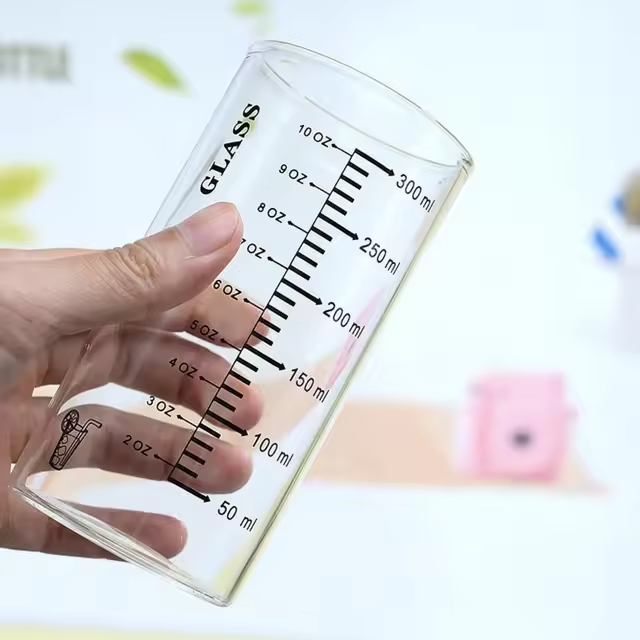
Ever grabbed a bottle of wine or spirits and noticed the “750 ml” label, only to pause and wonder—how many oz is 750 ml exactly? You’re not alone. Whether you’re mixing drinks, managing portion sizes, or just plain curious, understanding this measurement is more than just a math conversion—it’s about clarity, precision, and sometimes, a better party.
Let’s uncork the details and pour out all the relevant facts so you never second-guess a bottle label again.
What Does 750 ml Really Mean?
The “ml” in 750 ml stands for milliliters, a metric unit of volume. Milliliters are commonly used around the world for measuring liquids—especially in science, medicine, and beverage industries. In simple terms:
- 1 liter = 1,000 ml
- So, 750 ml = ¾ of a liter
This size is standard for most wine bottles, many liquor bottles, and even some specialty oils or dressings. But if you live in a country where ounces (oz) are more familiar, you’ll want to know the conversion.
The Straight Answer: How Many Ounces in 750 ml?
To convert milliliters to ounces, we use the formula:
1 milliliter = 0.033814 fluid ounces (US)
So, when we multiply:
750 ml × 0.033814 = 25.36 ounces
Answer:
750 ml = approximately 25.36 US fluid ounces
This means a standard 750 ml bottle contains just over 25 ounces of liquid. This is especially important to know when you’re:
- Pouring cocktails
- Cooking recipes from different countries
- Comparing bottle sizes
- Tracking alcohol consumption
- Measuring per-glass servings for events
Is There a Difference Between Fluid Ounces and Ounces?

Yes! And this confuses a lot of people.
- Fluid ounces (fl oz) measure volume – how much space a liquid occupies.
- Ounces (oz) measure weight – the heaviness of a substance.
So when you ask “how many oz is 750 ml,” you’re specifically asking how many fluid ounces, not weight ounces. That’s why a dense liquid like syrup will weigh more than the same volume of water—but still take up the same number of fluid ounces.
What About UK Ounces?
Here’s where it gets even trickier. If you’re in the UK or using an old British cookbook or bottle, be aware that:
1 UK fluid ounce = 0.0284131 liters = 28.41 ml
So, 750 ml = about 26.4 UK fluid ounces
So if you’re converting for international recipes or beverages, check the origin of the fluid ounce—US or UK.
Why Is 750 ml the Standard Bottle Size?
This is a fun bit of history. The 750 ml wine bottle became standard due to historical reasons, not precise science.
- Glassblowers in the 18th century could typically blow glass bottles of about 700–800 ml in one breath.
- Eventually, 750 ml became a practical and universal compromise.
- In 1979, the U.S. officially adopted 750 ml as the standard wine bottle size as it switched to the metric system for wine and spirits labeling.
The result? Globally consistent wine bottles.
How Many Servings in a 750 ml Bottle?

This is where the ounce breakdown becomes very practical.
For Wine:
- Standard wine pour = 5 oz
- 750 ml = 25.36 oz ÷ 5 oz = About 5 servings
For Spirits:
- Standard liquor shot = 1.5 oz
- 750 ml = 25.36 oz ÷ 1.5 oz = About 17 shots
This matters when planning events, controlling alcohol intake, or simply trying to avoid an unexpected liquor store run mid-party.
How to Use This Information Practically
Here are just a few situations where knowing “how many oz is 750 ml” helps you out:
- Bartending: Ensuring consistent pours for cocktails.
- Cooking: Many international recipes use ml. If your measuring cup is in oz, now you know the exact conversion.
- Shopping: Comparing unit prices across different bottle sizes.
- Health Tracking: Measuring water or beverage intake for daily goals.
- Wine Pairing Dinners: Calculating how many bottles you need for guests.
Bottle Size Comparisons
Now that we know 750 ml = 25.36 oz, let’s see how it compares to other common sizes:
| Bottle Size | Milliliters | Ounces (US) | Typical Use |
| Mini (nip) | 50 ml | 1.7 oz | Airplanes, samples |
| Half Pint | 200 ml | 6.8 oz | Small flask |
| Pint | 375 ml | 12.7 oz | Half bottle |
| Standard | 750 ml | 25.36 oz | Full bottle |
| Magnum | 1,500 ml | 50.72 oz | 2 standard bottles |
| Jeroboam | 3,000 ml | 101.44 oz | Party size |
Common Questions Answered
Q: Can I measure 750 ml with cups?
Yes. 1 US cup = 8 oz.
So, 750 ml = just over 3 cups (25.36 oz ÷ 8 oz = ~3.17 cups).
Q: Is 750 ml the same as a fifth?
Yes. In the U.S., a “fifth” of liquor used to be 1/5 of a gallon. That equals about 757 ml, and eventually got rounded to 750 ml in metric standards.
Q: Can I convert 750 ml to dry ounces?
Only if you know the density of the substance. For water, 750 ml weighs about 26.4 dry oz. But for something heavier (like syrup), the weight would be higher.
Final Thoughts
At first glance, “how many oz is 750 ml” seems like a simple conversion. But behind that number is a world of practical insight—whether you’re a host preparing the perfect wine servings, a mixologist crafting balanced cocktails, or a curious shopper decoding bottle labels.
Understanding the measurement helps you plan smarter, drink responsibly, and avoid guesswork. So the next time you spot that “750 ml” mark, you’ll know you’re holding just over 25 ounces of potential—ready to be measured, poured, or savored with confidence.
