
How Many Quarters Are in a Roll? Everything You Need to Know

If you’ve ever found yourself cleaning out your pockets, digging into your car’s cup holders, or emptying your coin jar and wondering how to sort and count your change efficiently — you’re not alone. One of the most common questions people ask when organizing coins is: “How many quarters are in a roll?”
Whether you’re preparing to deposit your coins at the bank, managing cash in a small business, or simply getting organized, understanding how coin rolls work is a basic yet crucial part of handling physical currency. Let’s break it all down and explore not only the number of quarters in a roll but also the history, value, and relevance of coin rolls in modern transactions.
Quick Answer: How Many Quarters in a Roll?
A standard U.S. quarter roll contains:
- 40 quarters
- Which equals $10.00
This count and value are regulated and standardized by the U.S. Mint to ensure consistency across all banking and retail systems.
Why Is It Important to Know This?
Knowing the number of quarters in a roll is important for:
- Bank Deposits: Banks accept rolled coins, and accuracy is essential.
- Retail Businesses: Cashiers and business owners rely on rolled coins for quick transactions and till management.
- Personal Finance: Rolling coins is an easy way to turn loose change into spendable cash.
- Vending Machines & Laundromats: These industries use quarters heavily, and rolling them streamlines operations.
Standard Coin Roll Quantities in the U.S.
For better context, here’s a breakdown of other U.S. coin denominations and their standard roll amounts:
| Coin Type | Coins per Roll | Total Value |
| Pennies | 50 | $0.50 |
| Nickels | 40 | $2.00 |
| Dimes | 50 | $5.00 |
| Quarters | 40 | $10.00 |
| Half Dollars | 20 | $10.00 |
| Dollar Coins | 25 | $25.00 |
As you can see, 40 quarters per roll fits right in with the standardized structure.
What Does a Quarter Roll Look Like?
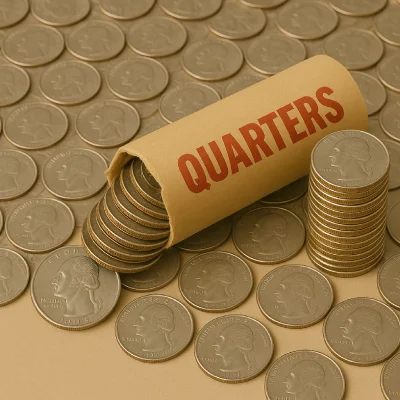
A roll of quarters is typically wrapped in a paper or plastic coin wrapper. The wrapper is color-coded — red-striped wrappers are used for quarters in the U.S. This helps bank tellers and store clerks identify them quickly.
Dimensions of a quarter roll:
- Length: Approx. 3 inches
- Diameter: About 0.75 inches
- Weight: Since a single quarter weighs 5.67 grams, a roll weighs roughly 226.8 grams, or about 8 ounces (half a pound).
The Origin of Coin Rolling
The idea of rolling coins dates back to the 19th century when banks and merchants needed an efficient way to count and transport money. Coin wrappers came into play to standardize the process. Later, machines were invented to assist in rolling coins automatically.
Today, coin rolling is still a common practice for banks, businesses, and households — even in our increasingly digital age.
How to Roll Quarters Properly
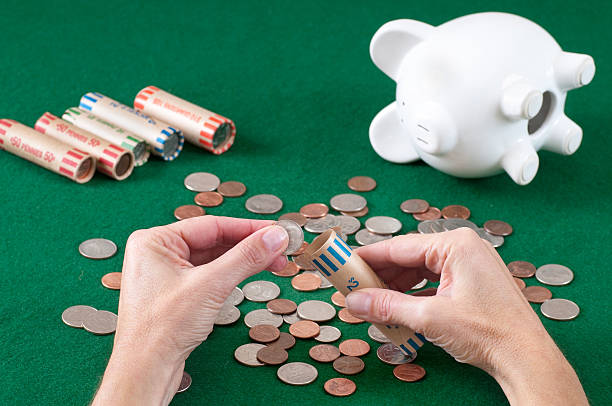
Rolling coins isn’t complicated, but doing it accurately matters. Here’s a quick step-by-step guide:
- Sort Your Coins
Separate quarters from other coins. - Count Out 40 Quarters
Ensure the count is exact — consider using a coin sorter if you have many coins. - Insert into Wrapper
Place 40 quarters into a red-striped quarter wrapper. - Seal Both Ends
Fold the edges of the paper wrapper securely. If using plastic wrappers, ensure they’re sealed or snapped shut. - Label (if necessary)
Some banks require labeling — name, account number, or total value.
Where to Get Coin Wrappers
You can find quarter wrappers at:
- Banks (many offer them for free)
- Office supply stores
- Retailers like Walmart or Target
- Online marketplaces
Choose between paper wrappers (traditional) or plastic ones (durable and reusable).
Can You Deposit Rolled Quarters at Any Bank?
Most banks accept rolled coins, but policies may vary:
- Some banks require an account to deposit rolled coins.
- Others may have a maximum daily limit for coin deposits.
- A few may even charge fees if you’re not a customer.
Always call your bank beforehand to confirm their policy.
Coin Rolling Machines: A Worthwhile Investment?
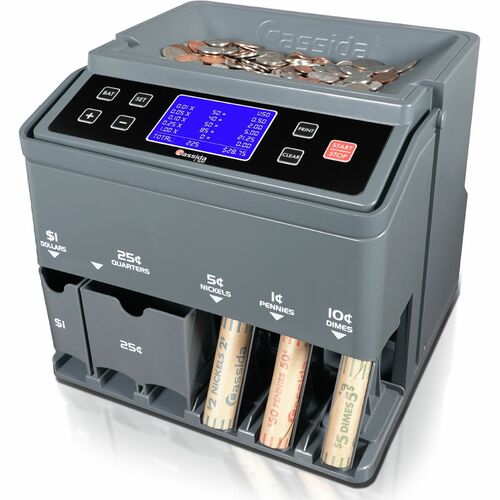
If you manage a large volume of coins, a coin sorting and rolling machine might be useful. These devices automatically sort coins by denomination and fill wrappers for you. They’re especially helpful for:
- Laundromats
- Arcades
- Vending machine operators
- Retail shops
Prices range from $50 for simple models to several hundred for high-capacity machines.
Interesting Facts About Quarters
To add a little spark to your coin knowledge:
- The quarter was first minted in 1796.
- George Washington has appeared on the quarter since 1932.
- There are 50 State Quarters, each representing a U.S. state, issued between 1999 and 2008.
- In 2022, the U.S. Mint launched the American Women Quarters Program featuring trailblazing women in history.
Rolling coins isn’t just practical — it’s a small window into the fascinating world of U.S. currency.
When Should You Use Rolled Quarters?
You should consider rolling your quarters when:
- You’ve accumulated a lot of loose change.
- You want to avoid coin-counting machine fees (which can be up to 11%).
- Your business operates in cash and you need organized change.
- You want to cash out your saved coins at the bank easily.
Are Coin Rolls Still Relevant in the Digital Age?
Absolutely. Even with the rise of digital wallets and card payments, physical currency remains widely used. Coin rolls are essential for:
- Small transactions
- Cash-driven businesses
- Charity collections
- Children’s savings habits
Coins may be small, but they play a big role — especially when properly rolled.
Final Thoughts
There are 40 quarters in a roll, making a total of $10.00. Rolling quarters is a simple yet valuable habit for managing physical money, whether you’re a business owner, a bank customer, or someone just cleaning out their drawer.
Understanding how coin rolls work helps streamline your finances, avoid banking confusion, and maybe even teach you something new about currency. So next time your change jar is full, don’t let those coins sit idle. Roll them up, stack them smartly, and turn small change into big convenience.


