
How Much Does a Hockey Puck Weigh? A Deep Dive Into This Small But Mighty Icon of the Ice

It zips across the ice at over 100 miles per hour. It takes hits from sticks, gloves, skates — even faces. It’s small, solid, and at the heart of every face-off and goal scored. We’re talking about the hockey puck — the unassuming yet essential piece of gear that drives the entire game. But have you ever stopped to ask: how much does a hockey puck weigh?
Spoiler alert — it’s heavier than it looks. And the weight isn’t random; it’s critical to the game’s balance of speed, control, and safety. This article breaks down the weight, variations, and the surprising science behind one of hockey’s most underrated components.
So, How Much Does a Hockey Puck Weigh?

A standard hockey puck used in professional and competitive games weighs 6 ounces, or approximately 170 grams.
This weight is not arbitrary — it’s set by regulation and carefully maintained across leagues like the NHL and international bodies. The puck’s size and weight work together to create the ideal glide, bounce, and resistance that high-speed hockey demands.
Standard Dimensions of a Hockey Puck:
- Diameter: 3 inches (76.2 mm)
- Thickness: 1 inch (25.4 mm)
- Weight: 6 ounces (170 grams)
Made from vulcanized rubber, the puck is engineered to withstand extreme force and temperature shifts. It’s not soft. It’s not hollow. It’s built for battle.
Why Weight Matters in Hockey
You might wonder — why not make it lighter for speed, or heavier for control? Here’s why 6 ounces is the sweet spot:
- Speed and Glide: At 6 ounces, the puck is heavy enough to stay grounded, even during fast passes or slapshots.
- Control: A lighter puck would be too bouncy, while a heavier one would slow down gameplay.
- Consistency: Uniform weight ensures fairness and predictability during competitive play.
- Durability: A puck must absorb the impact of high-velocity shots and body contact without cracking.
This balance allows players to pass with precision, shoot with power, and maintain gameplay fluidity — all while minimizing injury risk.
Are There Different Types of Pucks?
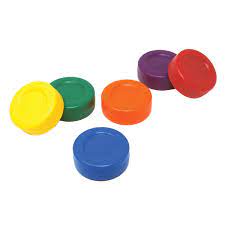
Yes, not all hockey pucks weigh the same. While 6 ounces is standard for professional play, other variations exist for training and age-appropriate use:
Lighter Pucks (4 oz / 113 g):
- Designed for youth or beginner players
- Easier to lift and shoot
- Helps build basic skills without fatigue
Heavier Pucks (10 oz / 283 g):
- Used in training
- Improves wrist strength and shot power
- Makes switching to a standard puck feel easier during actual games
Inline or Roller Hockey Pucks:
- Typically weigh 3.5 to 4.5 ounces
- Designed for smooth movement on indoor surfaces
- Often include small protrusions to reduce friction
Practice Pucks:
- May come in different colors and weights
- Some glow-in-the-dark or off-ice training versions exist
Each puck serves a specific purpose — but in official games, the answer to how much does a hockey puck weigh remains a firm 6 ounces.
Fun Fact: Frozen Pucks Matter
In professional games, pucks are frozen before use. Why? Because cold rubber is less bouncy and glides better. During a game, multiple pucks are rotated to maintain that ideal low temperature.
It’s another example of how weight, material, and physics work together to deliver the best possible experience on the ice.
Final Note
So, how much does a hockey puck weigh? Officially, 6 ounces — but the real story behind that number is packed with science, tradition, and function. The next time you watch a game or pick up a puck, remember that every pass, shot, and goal depends on that perfect balance of weight and design.
It may be small, but in hockey, the puck is everything. And now, you know exactly why it weighs what it does — and why that matters every time it hits the ice.