
How to Understand Tactical and Team Work in Soccer
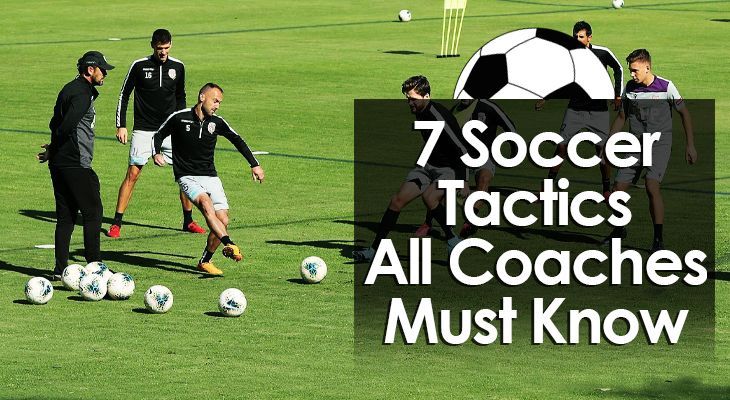
To understand tactical teamwork in soccer, you need to grasp formations, player roles, and how they connect on the field. Focus on communication—both verbal cues and body language—to keep your team coordinated under pressure. Master offensive and defensive strategies, including set pieces and changes, to outperform opponents. Trust and chemistry let you anticipate teammates’ moves and make quick decisions. Developing these skills turns individual talent into a winning, cohesive unit ready for any challenge. Keep exploring to reveal deeper tactics and teamwork insights.
Key Takeaways
- Learn various soccer formations to grasp player roles, positioning, and tactical flexibility for effective teamwork.
- Master offensive and defensive strategies to coordinate attacking runs, marking, and set piece organization.
- Develop clear communication skills using verbal cues and body language to maintain team shape and coordinate play.
- Build trust and chemistry through mutual support, shared goals, and honest feedback for synchronized decision-making.
- Enhance situational awareness and adaptability to anticipate opponents and smoothly transition between attack and defense.
The Basics of Soccer Formations
How do soccer formations shape the way your team plays on the field? They provide the foundation for your team’s strategy, dictating positioning, movement, and overall balance. You need to understand formation variations to adapt effectively during a game. Whether it’s a defensive 4-5-1 or an attacking 4-3-3, each setup influences your team’s strengths and weaknesses. Tactical flexibility is essential—you must switch formations smoothly to exploit opponents’ vulnerabilities or respond to changing match circumstances. Mastering these basics empowers you to control the flow of the game, optimize player roles, and maintain structure under pressure. By embracing formation variations and tactical flexibility, you elevate your team’s performance and gain a strategic edge on the field.
Key Roles and Responsibilities of Players
Understanding formations sets the stage, but the game truly comes to life through the specific roles each player takes on. You need to grasp player positions and how role specialization enhances team efficiency. Each player’s assigned responsibilities demand tactical awareness and positional understanding to anticipate plays and support teammates effectively. Your individual duties aren’t isolated; they integrate into the broader teamwork dynamics, making cohesion essential. Meeting player expectations means mastering your role while adapting to the team’s evolving strategy. Whether you’re defending, creating chances, or controlling the midfield, your contribution shapes the team’s success. Embrace these key roles with focus and discipline, and you’ll elevate not just your own game but the entire squad’s performance.
Understanding Offensive Strategies
When you focus on offensive strategies, you unfasten your team’s potential to control the game and create scoring opportunities. You must master offensive patterns that dictate how your team advances the ball, exploits space, and disrupts the opponent’s defense. Recognize the value of coordinated attacking movements—timed runs, quick passes, and positional rotations—that keep defenders off balance. By understanding these elements, you empower your teammates to anticipate plays, create overloads, and open shooting lanes. Always emphasize fluidity and adaptability so your offense remains unpredictable. Drill these strategies consistently so your team executes with confidence and precision. When you grasp offensive strategies deeply, you transform your squad from reactive players into proactive creators, maximizing every chance to score and dominate the match.
Defensive Tactics and Team Shape
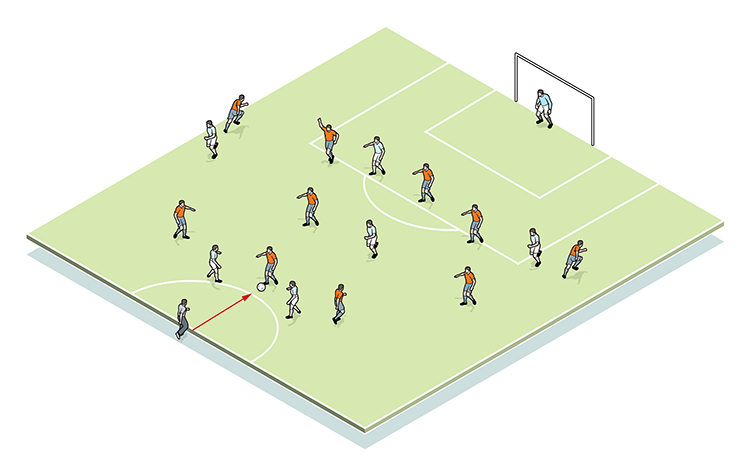
Offense may win games, but solid defense keeps you in control and protects your lead. To master defensive tactics, you need to understand how to maintain your team shape effectively. Whether you choose zonal marking or man to man, your defensive line must stay compact and organized. Zonal marking demands that you cover specific areas, cutting off passing lanes and forcing opponents into mistakes. Man to man requires close attention to your assigned opponent, denying them space and time on the ball. In both cases, staying disciplined and maintaining your shape prevents gaps that attackers can exploit. Commit to these defensive principles, and you’ll build a resilient unit that frustrates opponents and provides a strong foundation for your team’s success.
The Importance of Communication on the Field
Communication drives every successful play on the soccer field. You must use clear verbal cues and confident body language to keep your teammates informed and aligned. Tactical signals help coordinate player positioning and maintain team shape under pressure. Don’t underestimate the power of encouraging feedback; it boosts morale and sharpens focus during intense moments. Developing situational awareness enables you to anticipate opponents’ moves and adjust accordingly. Engage actively in strategic discussions to align your team’s approach and adapt to evolving game dynamics. Embrace leadership roles by guiding less experienced players and setting a positive example. When you communicate effectively, you transform individual efforts into a cohesive unit, elevating your team’s performance and increasing your chances of victory. Prioritize communication—it’s your team’s most essential tool on the field.
Transition Play: From Defense to Attack
Although defense is essential, mastering the change from defense to attack separates good teams from great ones. You need to implement effective shift strategies that allow your team to exploit moments immediately after regaining possession. Focus on quick counterattacks by moving the ball rapidly into offensive positions before the opposing defense can reorganize. Train your players to recognize these critical moments, urging them to think fast and act decisively. Encourage precise passing and intelligent positioning to maximize space and create scoring opportunities. Remember, your ability to switch seamlessly from defending to attacking disrupts your opponent’s rhythm and puts constant pressure on them. Embrace change play as a powerful weapon—when executed well, it transforms your team’s performance and elevates your overall tactical effectiveness on the field.
Pressing and Counter-Pressing Explained
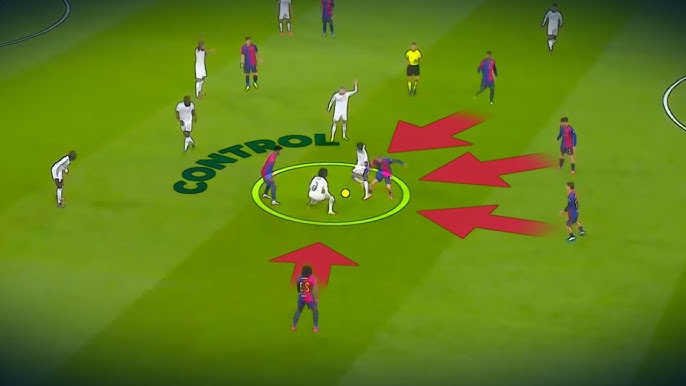
When your team loses possession, applying immediate pressure can turn the tide in your favor. Recognize pressing triggers—like a poor touch or backward pass—to launch an effective press. When you spot these moments, act quickly and close down opponents to force mistakes. Counter-pressing scenarios demand swift, coordinated responses right after losing the ball. Your team must instantly swarm the ball carrier to regain possession before the opposition organizes. Communication and positioning are key; every player needs to know when to press and when to cover. By mastering these moments, you disrupt opponents’ rhythm and capitalize on turnovers. Embrace pressing and counter-pressing as powerful tools to control the game’s tempo and create scoring opportunities. Your proactive mindset can change matches decisively.
Set Pieces and Their Tactical Uses
You need to master the different types of set pieces to gain an edge during critical moments in the game. Focus on crafting sharp offensive strategies that maximize scoring chances and organize your defense to shut down your opponents effectively. By controlling set pieces, you control the flow of the match.
Types of Set Pieces
Set pieces are critical moments in soccer that can turn the tide of a game, and understanding their types is essential for effective tactical execution. You need to recognize the different set pieces: corner kicks, free kicks, throw-ins, goal kicks, indirect free kicks, direct free kicks, and penalty kicks. Each demands specific preparation and awareness. For instance, corner kicks and free kicks often involve carefully planned set piece routines to exploit defensive weaknesses. Throw-ins and goal kicks restart play but also offer tactical opportunities to control the game’s pace. Distinguishing between indirect and direct free kicks helps you decide whether a shot on goal is allowed immediately. Penalty kicks, though rare, are high-pressure opportunities that require focused execution. Mastering these types gives you a tactical edge and boosts your team’s overall effectiveness.
Offensive Set Piece Strategies
Release scoring opportunities by mastering offensive set piece strategies that capitalize on your team’s strengths and exploit opponents’ weaknesses. Focus on perfecting corner kicks and free kicks through well-rehearsed set piece routines. Emphasize precise player positioning to create space and confuse defensive marking, allowing your attackers to make effective attacking runs. Timing execution is vital—coordinate your team’s movements to catch the defense off guard. Incorporate creative plays that leverage aerial threats, especially if you have strong headers in your lineup. Don’t forget goalkeeper involvement; sometimes, their quick distribution can turn set pieces into sudden counter-attacks. By honing these elements, you’ll elevate your team’s offensive threat during set pieces, turning dead-ball situations into reliable scoring chances. Stay disciplined, communicate clearly, and always adapt strategies to outsmart your opponents.
Defensive Set Piece Organization
Although offensive set pieces grab much of the spotlight, mastering defensive set piece organization is just as essential to your team’s success. You need to implement clear defensive formations that combine zonal marking and man marking to cover all threats effectively. Focus on set piece routines that emphasize precise player spacing to prevent attackers from exploiting gaps. Your goalkeeper positioning must be sharp, commanding the area and ready to react. Defensive communication is imperative—encourage constant talking to coordinate movements and anticipate opponents’ intentions. Sharpen your team’s anticipation skills so players can predict and intercept dangerous crosses or shots. By controlling these elements, you’ll build a resilient defense that frustrates opponents and turns set pieces into a clear advantage for your team.
Building Team Chemistry and Cohesion
You need clear communication on the field to keep everyone aligned and ready to react. Building trust among teammates guarantees each player can rely on others in high-pressure moments. Stay focused on shared goals and vision to unite your team’s efforts toward victory.
Communication on the Field
When players communicate clearly and consistently on the field, they create a strong foundation for team chemistry and cohesion. You must use both verbal cues and non-verbal signals to enhance player positioning and boost tactical awareness. Your game intelligence sharpens when you actively engage in effective listening, ensuring every message is understood and acted upon swiftly. Communication isn’t just about instructions; it’s about providing emotional support to keep teammates motivated under pressure. Embrace situational adaptability by adjusting your communication style based on the evolving dynamics during the match. This constant exchange of information helps you and your teammates anticipate moves, cover gaps, and maintain fluid coordination. Mastering communication on the field transforms individual skills into a unified team performance, driving success with precision and confidence.
Trust Among Teammates
Trust forms the backbone of every successful soccer team, fueling seamless collaboration and resilience on the field. To build strong trust among teammates, you must invest in consistent mutual support, showing reliability in both practice and matches. When you trust your teammates, you enhance team dynamics by creating an environment where each player feels confident to take risks and communicate openly. This trust allows you to anticipate each other’s moves, leading to synchronized play and quick decision-making. Remember, trust isn’t built overnight—it requires honest feedback, accountability, and shared experiences. By committing to these principles, you foster chemistry that translates into cohesive teamwork, making your squad more adaptable and effective under pressure. Cultivate trust, and your team will perform not just as individuals, but as a unified force.
Shared Goals and Vision
Unity drives every great soccer team toward success. To build that unity, you must align everyone around shared objectives. When each player understands and commits to the same goals, your team moves as one cohesive unit. Establish a unified vision early, making sure every member buys into it fully. This vision becomes your roadmap, guiding decisions on and off the pitch. Encourage open communication to reinforce these shared objectives constantly. When challenges arise, your team will rely on this collective purpose to stay focused and motivated. Remember, shared goals aren’t just about winning games; they cultivate trust and resilience, essential for long-term success. By fostering this alignment, you transform individual talents into a powerful, synchronized force ready to conquer any opponent.
Frequently Asked Questions
How Do Weather Conditions Affect Tactical Decisions in Soccer?
You must adjust your tactics based on weather adaptations to stay competitive. Rain or strong winds can slow down play, so focus on short passes and maintaining possession. Heat demands conserving energy, so pace your team carefully. Cold affects players’ agility, requiring strategic positioning. Recognize the environmental impact on ball control and player stamina, and tailor your game plan accordingly. By mastering these weather adaptations, you’ll lead your team to smarter, more effective decisions.
What Psychological Traits Enhance a Player’s Tactical Awareness?
Think of your mind as a chessboard—each move demands sharp decision-making skills and high game intelligence. To boost your tactical awareness, stay mentally agile and calm under pressure, so you can anticipate opponents’ moves. Cultivate focus and resilience; these traits help you read the game better and adjust strategies quickly. By sharpening these psychological traits, you’ll become a player who not only reacts but proactively controls the flow of the match.
How Does Nutrition Impact a Soccer Player’s Tactical Performance?
Nutrition impacts your tactical performance by fueling your brain and body, enabling quick decision-making and sustained focus. Use nutrition strategies that optimize energy levels and cognitive function, like balanced meals rich in complex carbs, lean proteins, and healthy fats. Hydrate well to maintain mental clarity and reaction time. By optimizing your nutrition, you enhance your overall performance, giving you the edge to read the game smarter and execute tactics flawlessly every match.
What Role Does Technology Play in Analyzing Team Tactics?
Imagine you’re a captain steering a ship through stormy seas; technology is your radar and compass. It uses data analysis and performance metrics to reveal hidden patterns and predict opponents’ moves. By interpreting this information, you can adjust your tactics swiftly and confidently. Embrace these tools—they empower you to lead your team smarter, sharpen strategies, and steer toward victory with precision and insight every game.
How Can Youth Coaches Teach Tactical Understanding Effectively?
You can teach tactical understanding effectively by using small sided games that simulate real game scenarios. These games keep players engaged, encourage quick decision-making, and highlight tactical principles in action. Focus on clear, simple instructions and encourage players to communicate and adapt on the field. By consistently practicing these scenarios, you’ll develop their awareness, positioning, and teamwork, setting a strong foundation for advanced tactical skills as they grow.
Conclusion
If you don’t master tactical and teamwork in soccer, you might as well be playing with blindfolds on! Understanding formations, roles, and strategies isn’t optional—it’s your secret weapon to dominating the field. Communicate like your life depends on it, press hard, and switch from defense to attack like a lightning bolt. Nail these skills, and you won’t just play soccer—you’ll command the game, turning every match into your personal masterpiece. Get out there and own it!


