
What Are Pave Diamonds? The Ultimate Guide to This Brilliant Setting

Imagine a ring that glows with endless sparkle—like a trail of stars wrapped around your finger.
That effect isn’t created by one big diamond, but by a masterful setting called pavé. You’ve likely admired it without realizing the precision and craftsmanship it involves. So, what are pave diamonds really? Let’s break it down thoroughly.
What Are Pave Diamonds?

The term “pavé” (pronounced pah-vay) comes from the French word for “paved.” Pavé diamonds refer not to a special kind of diamond, but to a jewelry setting where multiple small diamonds are placed closely together, so the metal underneath becomes nearly invisible.
Each stone is held in place by tiny beads or prongs, creating a seamless, glittering surface that appears to be paved with diamonds.
How Pave Diamond Settings Are Crafted
Creating a pavé setting is an art. Here’s what happens behind the sparkle:
- Micro-drilling: Jewelers drill tiny holes into the metal band to place each small diamond.
- Precise placement: Stones are placed tightly side by side to minimize gaps and maximize brilliance.
- Bead or prong setting: Each stone is carefully secured using small metal beads formed from the ring’s surface or added on top.
- Polishing: Once set, the piece is polished to perfection to allow maximum light reflection.
The goal is to make the setting itself disappear, letting the diamonds do all the talking.
Sizes and Carat Weights
Pavé diamonds are very small, often less than 0.01 to 0.02 carats each. While they’re small individually, together they form a surface that adds considerable visual impact.
Sometimes jewelers use melee diamonds, which are precision-cut tiny diamonds used specifically in settings like pavé or halo.
Types of Pave Diamond Settings
Understanding the variations of pavé styles is essential when shopping for jewelry or customizing a design:
1. Traditional Pavé

- Uniform small stones set with bead prongs.
- Common in wedding bands and engagement rings.
2. Micro Pavé
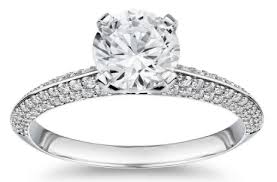
- Uses extremely small diamonds, often under 0.01 ct.
- Requires high magnification for setting.
- Known for precision and intricate beauty.
3. French Pavé

- Diamonds are set in V-shaped grooves.
- Minimal metal visibility and enhanced light exposure.
4. U-Cut Pavé (Scallop Pavé)

- Each diamond sits in a U-shaped cut.
- Maximizes brilliance by exposing the sides of the diamond.
5. Bead Pavé

- Most traditional.
- Held by small beads, often crafted from the same metal band.
Why Choose Pavé Diamonds?
Now that you know what are pave diamonds, here’s why people love them:
Maximized Sparkle
Even small diamonds reflect light—many together create incredible brilliance.
Enhances a Center Stone
In engagement rings, a pavé band draws attention to the main diamond, making it appear larger and more prominent.
Design Versatility
Pavé settings are used in rings, earrings, pendants, bracelets, and even watch bezels.
Adds Value Without Excess Cost
Using small diamonds reduces cost compared to large stones while still adding sparkle.
Pros and Cons of Pavé Settings
Every jewelry setting has trade-offs. Let’s examine both:
Pros:
- Luminous appearance: Looks more expensive than it is.
- Elegant detailing: Offers refined aesthetics.
- Affordable enhancement: Great way to elevate a piece without using large stones.
Cons:
- Delicate: Smaller stones can loosen or fall out over time if not well-maintained.
- Resizing limitations: Resizing a pavé ring may damage the setting.
- More maintenance: Dirt can build up in tight spaces between stones.
Pavé Diamond Durability & Maintenance
Because pavé diamonds are small and set tightly together, durability depends on quality craftsmanship and proper care:
- Don’t wear during heavy activity: Sports, gardening, or gym sessions can loosen stones.
- Clean gently: Use warm water, mild soap, and a soft toothbrush.
- Professional checks: Have your jeweler inspect the prongs and beads once or twice a year.
Things to Consider Before Buying
If you’re considering pavé jewelry, here are essential buying tips:
- Inspect the quality of the setting: Look for even spacing, tight prongs, and securely held stones.
- Ask about resizing: Confirm whether the design will allow future adjustments.
- Know your lifestyle: If you’re very active, you may need to be extra cautious.
- Choose reputable jewelers: Poor craftsmanship can lead to frequent repairs or loose stones.
Final Thoughts: What Are Pavé Diamonds?
To summarize: What are pave diamonds? They’re not a specific diamond type—but a highly refined setting style where small diamonds are placed closely together for a paved, brilliant surface.
The pavé setting is one of the most elegant and versatile techniques in jewelry design, used to add shimmer, sophistication, and visual value. Whether you’re buying an engagement ring, a gift, or a custom design, understanding how pavé works allows you to choose pieces that are as durable as they are dazzling.
In short: Pavé diamonds are proof that even the smallest stones, when set thoughtfully, can create maximum sparkle.