
How long can Whales hold their Breath? Dive into the Deep with Nature’s Champions

“Discover the Incredible Breath-Holding Power of Whales−Nature’s Deepest Divers”
Whales are known for their deep divers and breathtaking underwater journeys−but what truly amazes scientists and ocean lovers alike is how long these marine giants can hold breath. These marine mammals, unlike fish, rely on lungs to breath, which means they must surface for−air yet some species can dive for over an hour without taking a single breath.
From the massive blue whale to the elusive beaked whale, each species has evolved unique abilities that allow them to survive−and thrive−where oxygen is scare and pressure is crushing.
Let’s dive deep into how long whales can hold their breath−and what’s make them masters of the deep.
How do Whales breathe?

Whales are mammals, not fish−so unlike the creatures they swim with, they don’t have gills. Instead, they breathe air through lungs, just like humans do. But because they live underwater, whales have developed unique and powerful ways to manage their breathing that allows them to dive deep and stay submerged for long period.
The most important feature of whale’s respiratory system is the blowhole located at the top of the head. Using blowhole, they surface to take in huge gulps of oxygen before diving deep into the ocean. As they don’t have gills so they rely on highly efficient lungs that exchange up to 90% of the air in a single breathe. This efficient breathing, combined with high oxygen storage in their blood and muscles, allows them to dive for extended periods without needing to resurface.
How long can Whales hold their Breath?
Whales are among the most fascinating creatures in the ocean, not just for their size but for their incredible ability to stay underwater without breathing. While humans can barely hold their breath for a few minutes, whales can go for up to several hours. The exact time depends on the species, their diving habits, and what they’re doing underwater (like hunting or migrating).
Here’s a quick overview of each whale species and how long they can hold their breath:
1. Sperm Whale:
Famous from “Moby-Dick,” sperm whales are expert hunters of giant squid. They have blocky head filled with a waxy substance called spermaceti, which may help with buoyancy and sonar.
- Breath-hold: 45 to 90 minutes
- Maximum recorded: About 2 hours
- Fun fact: The sperm whale has largest brain of any animal and can dive over 7,000 feet deep.
2. Blue Whale:
Blue whales dive for krill, their primary food source, and can take in up to 4 tons of krill per day. Despite their massive size, they’re graceful swimmers and can dive hundreds of feet to feed.
- Breath-hold: 30 to 50 minutes
- Fun fact: The largest animal ever to live on earth, growing up to 100 feet long and weighing up to 200 tons.
3. Humpback Whale:
Humpbacks are migratory whales, traveling thousands of miles between feeding and breeding grounds. They often dive to moderate depths and are easily recognized by their long flippers and knobby heads.
- Breath-hold: 15 to 30 minutes
- Maximum recorded: Around 45 minutes
- Fun fact: Known for their singing and dramatic breaching behavior.
4. Orca (Killer Whale):
Orcas are apex predators, hunting in groups and eating from fish and seals to sharks and even other whales. Their dives aren’t as long or deep as others, but they’re incredibly intelligent and fast.
- Breath-hold: 10 to 20 minutes
- Maximum recorded: Around 30 minutes
- Fun fact: Orca’s are not actually whales−they’re the largest members of the dolphin family.
5. Cuvier’s Beaked Whale (The world record of longest dive):
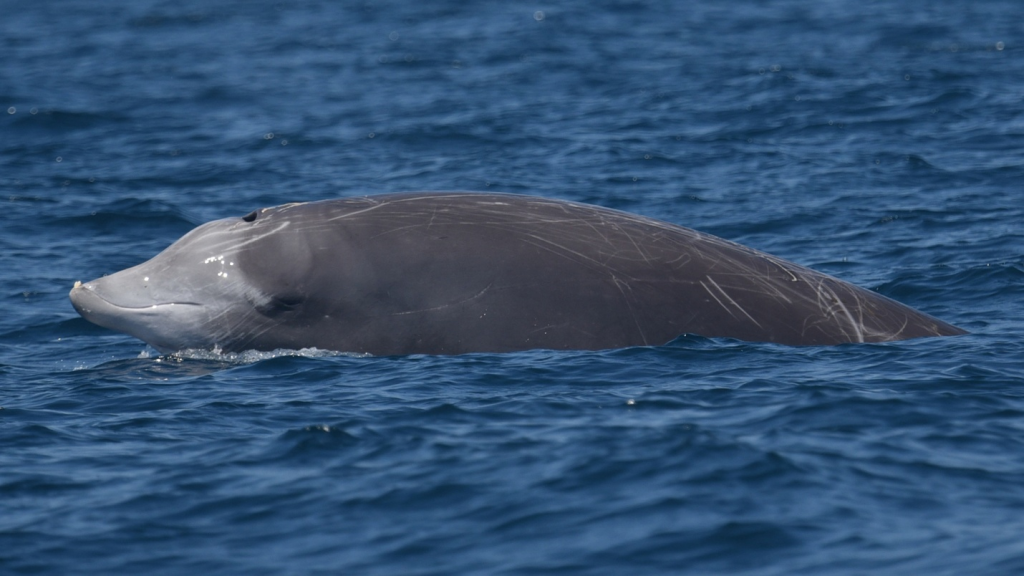
Cuvier’s beaked whales are small compared to giants like blue whales, but they are true champions of deep diving. Their record-breaking dives shocked scientists and confirmed their status as nature’s top breathes holders.
- Breath-hold: 60 to 90 minutes
- Maximum recorded: 3 hours and 42 minutes (worlds record)
- Fun fact: Known as the deepest-diving mammal, this shy, rarely seen whale dives over 9,800 feet (3,000 meters) in search of squid and deep-sea fish.
Quick Breakdown of Breath-holding times by Species:
- Quick Breakdown of Breath-holding times by Species:
| Whale Species | Typical Breath-Hold | Maximum Record Time |
| Cuvier’s Beaked Whale | 60−90 minutes | 3 hours 42 minutes (world record) |
| Sperm Whale | 45−90 minutes | Up to 2 hours |
| Blue Whale | 30−50 minutes | About 1 hour |
| Humpback Whale | 15−30 minutes | Up to 45 minutes |
| Orca (Killer Whale) | 10−20 minutes | Around 30 minutes |
These times are possible thanks to whales’ unique ability to store oxygen in their muscles and blood, slow their heart rates, and manage oxygen use efficiently during dives. So while the exact time varies, it’s clear that whales are built for long, powerful, and controlled underwater journeys.
How do Whales hold their breath so long?
Whales have evolved some amazing tricks to stretch their breath:
Such as:
- Slow Heart Rate: When diving, their heart rate can drop to just 2−10 beats per minute.
- Oxygen Storage: Whales store oxygen in their muscles and blood, not their lungs.
- Lung Collapse: Their lungs collapse at depth to prevent nitrogen absorption, avoiding decompression sickness.
- Selective Blood Flow: They send oxygen only to vital organs, conserving energy.
Final Thoughts: Nature’s Deep Divers
Whales are not just majestic ocean creatures−they’re marvels of natural engineering. Their breath-holding abilities are a result of millions of years of evolution, fine-tuned for survival in a world where oxygen isn’t always available.
So next time you see a whale exhale with a mighty blow at the surface, remember: it might have just returned from a journey thousands of feet beneath the waves, after holding its breath for over an hour. Nature is impressive−but whales? They’re something else entirely.