How to Clip Chicken Wings the Right Way: A Practical Guide for Every Poultry Keeper
If you’ve ever had a chicken take flight over your garden fence or vanish into the neighbor’s yard, you know the frustration. Chickens may not be Olympic fliers, but they can clear surprising heights when determined — especially lighter breeds. That’s where knowing how to clip chicken wings becomes crucial.
This isn’t about harming your birds; it’s about keeping them safe, contained, and stress-free. Clipping wings is a simple, humane solution that prevents escape and potential danger, but it must be done correctly. In this guide, you’ll learn exactly how to clip wings safely, when to do it, and what you need to avoid common mistakes.
Why Clip Chicken Wings?

Clipping wings isn’t about cruelty — it’s about safety and control. Here’s why backyard flock owners clip wings:
- To stop chickens from flying over fences
- To keep birds away from predators or traffic
- To prevent access to gardens or restricted areas
- To maintain peace in shared backyard spaces
Importantly, clipping doesn’t hurt the bird if done properly. It’s similar to trimming fingernails — but with a few more precautions.
What You’ll Need
Before you begin, gather these tools:
- A sharp pair of clean scissors or poultry shears
- A towel or blanket (to gently hold the chicken)
- An extra pair of hands (highly recommended)
- Good lighting and a calm environment
You should also have some styptic powder or cornstarch on hand in case you clip too far and cause minor bleeding — which can happen if you’re not careful.
When to Clip Chicken Wings
- Age: Wait until chickens are fully feathered — usually around 5-6 months.
- After Molting: Always check again after a molt, as new flight feathers can grow in.
- Early Morning or Late Evening: Chickens are calmer and easier to handle during these times.
Avoid clipping during the early stages of feather growth (blood feathers) as they are sensitive and filled with blood vessels.
Step-by-Step: How to Clip Chicken Wings

Step 1: Secure the Chicken
Wrap the chicken gently in a towel to prevent flapping. Hold it calmly but firmly. If possible, ask someone to hold the bird while you clip.
Step 2: Identify the Primary Flight Feathers
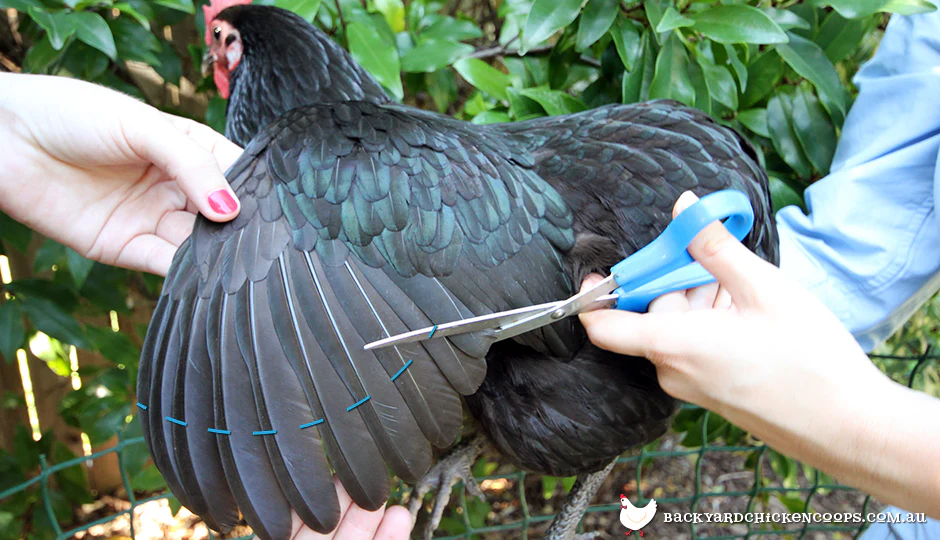
Extend one wing fully. Look for the longest feathers on the outer edge — these are the primary flight feathers. Usually, there are 10 of them.
Step 3: Clip Only One Wing
Cut only one wing to throw off the bird’s balance. This discourages flight more effectively than clipping both wings.
Using your scissors or shears, trim the first 7-10 primary feathers about halfway — right below the layer of smaller feathers above them. Do not cut too close to the base where blood feathers are present.
Step 4: Check Your Work
Once clipped, the wing should look even, and the cut feathers should be blunt at the ends. Ensure there’s no bleeding and that the bird is calm.
Step 5: Repeat Annually or As Needed
As feathers regrow, usually after a molt, clipping may need to be repeated. Always check for regrowth, especially if you notice your birds starting to get adventurous again.
Common Mistakes to Avoid
- Cutting Both Wings: This may allow the bird to still fly — though less effectively.
- Clipping Too Deep: Avoid cutting blood feathers; it’s painful and causes bleeding.
- Using Dull Tools: Dull scissors tear feathers, making the cut stressful for the bird.
- Clipping Too Early: Young chicks are not ready; always wait until fully feathered.
Important Considerations
- Breed Matters: Heavier breeds like Orpingtons or Brahmas rarely need clipping; lighter breeds like Leghorns or Bantams are more prone to flight.
- Environment: Sometimes a low fence or tempting garden is more the problem than the wings.
- Predator Awareness: Clipped chickens lose aerial escape options — only clip if your run or yard is secure.
Final Thoughts
Knowing how to clip chicken wings is a valuable skill for every backyard chicken owner. Done correctly, it’s a safe, humane method to manage your flock and keep them grounded — literally. It’s not about restricting their freedom, but about protecting them from harm and keeping your yard (and your neighbors!) in harmony.
A well-clipped wing is a sign of a responsible keeper — one who values both the safety of their birds and the sanity of their household. So grab your shears, follow the steps, and keep your feathered friends where they belong — safe, sound, and happily scratching on the ground.